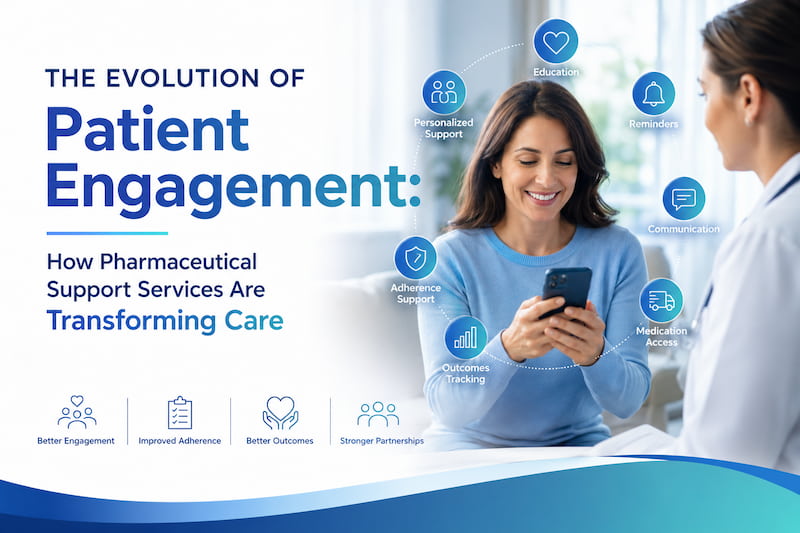
The journey from receiving a complex diagnosis to successfully managing a chronic condition is rarely a straight line. For many patients, being prescribed a specialty medication or a breakthrough biologic is only the first step in a daunting process filled with administrative hurdles, financial anxiety, and clinical uncertainty. Pharmaceutical companies are increasingly realizing that simply bringing a novel drug to market isn’t enough; they must also provide the robust operational scaffolding necessary for patients to access, afford, and strictly adhere to these specialized therapies.
This is exactly where comprehensive patient engagement and pharmaceutical support ecosystems come into play. If you’ve ever wondered what are hub services in pharma, they are centralized, highly orchestrated care networks designed to guide patients through every single phase of their treatment journey. A prime example of an industry leader in this space is Serva Health. They highlight their deep expertise by providing 24/7, nurse-staffed global support tailored for both clinical trial recruitment and full-scale commercial programs. By offering highly specialized services—such as meticulous pre-screening, complex referral management, robust retention initiatives, nurse-led patient support programs (PSPs), and vital reimbursement support—Serva Health helps pharmaceutical companies significantly improve patient outcomes, streamline intricate administrative processes, and ensure effective, end-to-end program management.
The Paradigm Shift: From Product-Centric to Patient-Centric Care
Historically, the pharmaceutical industry operated on a somewhat transactional model: research a molecule, manufacture the drug, prescribe it to the masses, and dispense it at the local pharmacy. However, the rapid rise of specialty therapies has completely rewritten this outdated playbook. Treatments for rare diseases, targeted oncology, and severe autoimmune disorders require strict adherence protocols, specialized administration techniques (like self-injection or intravenous infusion), and constant, vigilant clinical monitoring.
When patients feel overwhelmed by the logistical burdens of their treatment, they drop off. Medication non-adherence is not just a clinical failure; it is a systemic flaw that leads to declining health for the patient and immense financial waste for the healthcare ecosystem. To combat this, the industry has pivoted toward a highly patient-centric approach. Patient engagement is no longer viewed as a peripheral marketing tactic or a “nice-to-have” add-on; it is an integrated, foundational clinical strategy. True engagement means actively collaborating with patients to understand their unique socioeconomic barriers to care and providing the specific resources required to overcome them.
Deconstructing Hub Services and Patient Support Programs
The term “hub” perfectly encapsulates the function of these centralized services: they sit at the absolute center of the healthcare wheel, seamlessly connecting the patient, the prescribing physician, the specialty pharmacy, and the payer network. But what does this look like in daily practice? The most effective support programs are multi-faceted and heavily rely on dedicated human expertise augmented by smart technology.
Nurse-Led Patient Support Programs (PSPs)
The cornerstone of a successful pharmaceutical hub is clinical empathy. Navigating a new, life-altering diagnosis is terrifying. Having access to a 24/7, nurse-staffed support line gives patients an immediate lifeline to a trained clinical professional who can answer late-night questions about side effects, demonstrate proper injection techniques via telehealth, and provide essential emotional support.
The clinical value of these interventions is well documented. For instance, systematic reviews published in authoritative medical journals like BMJ Open Respiratory Research have demonstrated that participation in structured Patient Support Programs is consistently linked to positive clinical outcomes. Among patients with severe chronic conditions, those utilizing PSPs showed significantly higher treatment adherence, improved health-related quality of life, and were far less likely to prematurely discontinue their specialized therapies compared to those navigating their care alone.
Complex Referral Management and Clinical Triage
Specialty medications often require exhaustive prior authorizations, step-therapy validations, and constant coordination between multiple specialists and laboratories. Hub services take this heavy administrative burden off the shoulders of both the anxious patient and the overworked physician’s office. By expertly managing these complex referral pathways, hubs ensure that patients start their prescribed therapies faster and with drastically fewer frustrating logistical delays.
Reimbursement Support and Financial Navigation
Perhaps the single biggest barrier to specialty medication adherence is cost. High deductibles, complicated insurance tiers, and the rise of restrictive pharmacy benefit manager (PBM) policies can make life-saving drugs feel completely inaccessible to the average family. Pharmaceutical support services employ dedicated financial specialists who deeply understand the labyrinth of modern healthcare insurance. They seamlessly help patients secure prior authorizations, navigate complex benefit verifications, and connect them directly with co-pay assistance programs, foundation grants, or manufacturer-sponsored financial aid, ensuring that cost does not prevent care.
The Critical Role of Engagement in Clinical Trials
The urgent need for robust patient engagement begins long before a drug ever reaches the commercial market; it is an absolute necessity during the clinical trial phase. Recruitment and retention have historically been the biggest, most expensive bottlenecks in medical research. Trials frequently face catastrophic delays simply because sponsors cannot find enough eligible participants, or because participants drop out mid-study due to the sheer logistical burden of the research protocols.
Pre-Screening and Proactive Patient Recruitment
Global, nurse-staffed support networks are invaluable for identifying and pre-screening potential trial candidates. By engaging with patients early, acting as a trusted educational resource, and clearly explaining the trial process in accessible layman’s terms, hubs can build a reliable pipeline of informed, highly motivated participants.
Addressing the Patient Burden Early
The clinical trial experience can be incredibly demanding on a patient’s time, energy, and finances, often requiring extensive travel and invasive monitoring. To improve the end-to-end research experience, modern support solutions focus heavily on understanding the patient’s real-world context. Industry research highlighted in journals such as Clinical Trials emphasizes the importance of developing holistic service solutions that mitigate logistical challenges from day one. Interventions designed strictly around the patient perspective aim to address lifestyle concerns early, making trial participation less intimidating and far more accessible for diverse, underrepresented populations.
Retention Initiatives Through Convenience and Care
Keeping a patient actively enrolled in a multi-year, complex trial requires constant, proactive engagement. Recent trends in clinical research, widely discussed by regulatory experts and publications like Therapeutic Innovation & Regulatory Science, show a distinct shift toward adopting convenience-enhancing solutions to keep patients engaged and satisfied.
The strategic use of decentralized trial technologies—such as smartphone symptom-tracking apps, wearable biometric devices, and automated text messaging—has grown exponentially. These tools specifically aim to reduce the daily logistical burden on trial participants. Crucially, the implementation of these convenience-enhancing strategies, combined with dedicated human support, is directly correlated with higher patient ratings for the care they receive, which ultimately protects the trial’s statistical power by drastically improving overall retention rates.
Streamlining Processes for Pharmaceutical Companies
While the primary, overarching goal of these services is to support and protect the patient, the operational and financial benefits for the pharmaceutical companies themselves are massive. Managing a global drug launch or coordinating a multinational Phase III clinical trial is a staggeringly complex logistical puzzle. By partnering with expert hub service providers, pharma companies can drastically streamline their internal operational processes.
Instead of juggling a fragmented, disjointed network of local vendors and call centers, a centralized hub provides a single source of truth. This ensures consistent clinical data collection, standardized compliance with stringent global regulatory bodies like the Food and Drug Administration (FDA), and a unified, premium brand experience for the patient.
Furthermore, effective program management allows pharmaceutical companies to track real-time, anonymized analytics regarding prescription abandonment rates, time-to-fill metrics, and overall patient adherence. This high-level, actionable data is absolutely critical for refining commercial marketing strategies, adjusting supply chain logistics, and proving the real-world value (RWV) of a therapy to skeptical payers and health technology assessment agencies.
The Future: Blending Digital Agility with Human Connection
As we look to the future of healthcare administration and specialty pharmacy, the ongoing evolution of patient support services will rely entirely on finding the delicate balance between advanced digital technology and genuine human empathy. Artificial intelligence, predictive analytics, and automated SMS reminders are fantastic, scalable tools for stratifying large patient populations and quickly identifying those at the highest risk of non-adherence.
However, algorithms cannot replicate the calm reassurance provided by a registered nurse walking an anxious, newly diagnosed patient through their very first self-injection at two in the morning.
The most successful pharmaceutical support services will be those that strategically utilize technology to remove administrative friction and automate the mundane, thereby freeing up their highly trained clinical staff to do what they do best: care for the human being at the center of the treatment plan.
Conclusion
The era of prescribing a specialty medication and simply hoping for the best is definitively over. The sheer complexity, cost, and clinical risk associated with modern therapeutics demand a modern, deeply engaged approach to patient care. By investing heavily in comprehensive hub services and nurse-led patient support programs, pharmaceutical companies are doing much more than just protecting their commercial assets and accelerating trial timelines; they are actively dismantling the towering administrative barriers that stand between a patient and their health.
Providers like Serva Health exemplify how implementing 24/7 global clinical support, precise pre-screening, and dedicated reimbursement navigation can transform a traditionally fragmented healthcare journey into a cohesive, highly supportive experience. Ultimately, when the industry prioritizes genuine patient engagement and provides the logistical and clinical scaffolding necessary for long-term success, everyone wins: healthcare systems run more efficiently, pharmaceutical programs achieve their required clinical metrics, and most importantly, patients experience the life-changing medical outcomes they deserve.
Did you find this helpful? Check out our other helpful articles on our website.
Read Also
- What Today’s Patients Expect From Healthcare Brands
 Healthcare is no longer experienced only through appointments, prescriptions, or hospital visits. Patients now interact with healthcare brands through websites, mobile applications, educational articles, product instructions, customer support teams, social media, and online reviews. Every one of these interactions influences how people judge a company. This shift has raised expectations. Patients want accurate information, convenient… Read more: What Today’s Patients Expect From Healthcare Brands
 - Top Trends Shaping the Future of Mental Health CareMental health care is moving fast to meet daily human needs. People want direct care that fits modern life. Clinics respond by creating flexible options that make healing easier to reach. Providers look past rigid habits to give people solid care. From smart tools to body wellness, these changes help people find relief when life… Read more: Top Trends Shaping the Future of Mental Health Care
- Can Outsourced Telepsychiatry Help Healthcare Organizations Keep Pace With Modern Mental Health Screening?Mental healthcare is changing quickly, but many hospitals, clinics, schools, correctional facilities, and community health organizations do not have enough psychiatric professionals available to turn new screening approaches into timely clinical care. Outsourced telepsychiatry offers one way to close that gap. FasPsych, for example, connects healthcare organizations with psychiatrists, psychiatric nurse practitioners, and other behavioral… Read more: Can Outsourced Telepsychiatry Help Healthcare Organizations Keep Pace With Modern Mental Health Screening?
- Five operational checks for choking readiness in healthcare facilitiesA facility can have a choking poster on every wall and still be unprepared. Preparedness shows up when someone can recognize the emergency, call the right response, bring the right people and supplies to the room, and hand over clear information without losing time. That test belongs in operations as well as clinical education. The… Read more: Five operational checks for choking readiness in healthcare facilities
- Understanding the Demand for Correctional Healthcare ProfessionalsHave you ever wondered who cares for people when they get sick inside a prison? Many people do not realize that jails and prisons need skilled medical teams every single day. By reading this guide, you will learn why these important jobs are growing fast and how you can join this rewarding career field. Caring… Read more: Understanding the Demand for Correctional Healthcare Professionals
- Patient Engagement and Pharmaceutical Support Services: Building a Better Patient JourneyPatients rarely experience healthcare as a simple, linear process. They may need to understand a diagnosis, determine whether they qualify for a clinical trial, gather medical records, navigate insurance requirements, arrange transportation, learn how to use a medication, and stay engaged with treatment for months or years. Serva Health is one example of a specialist… Read more: Patient Engagement and Pharmaceutical Support Services: Building a Better Patient Journey
- Industrial Container Recycling and Waste Management Services: A Practical Guide for BusinessesIndustrial container recycling is an essential part of responsible waste management for manufacturers, warehouses, laboratories, automotive businesses, chemical companies, food processors, and other organizations that regularly handle bulk materials. A strong example is Kelly Drums, a Mid-Atlantic provider of reconditioned drums and comprehensive container management solutions. The company specializes in the pickup, recycling, reconditioning, and… Read more: Industrial Container Recycling and Waste Management Services: A Practical Guide for Businesses
- Why Biotech Is Entering Its Most Exciting DecadeBiotech has always been an industry built on possibility. Every year brings discoveries, new technologies, and fresh optimism about what medicine might achieve next. What’s different today is that several of those advances are beginning to happen at once. Artificial intelligence is helping researchers analyse enormous amounts of data. Cell therapies are opening new ways… Read more: Why Biotech Is Entering Its Most Exciting Decade